
Product Design · AI Hackathon
Flashback
Your Personal AI Assistant—an educational tool that helps you recall details about recent interactions and important lessons from class.
Role
Product Designer & Strategist
Timeline
36 hours (Nov 2024)
Team
4 members (Duke AI Hackathon)
Project Link
DevPostWatch the Demo
Flashback in motion
Logo Design
I designed the Flashback logo to embody the concept of memory and AI integration. The brain silhouette with circuit-like neural pathways represents the intersection of human cognition and artificial intelligence, while the gold accents symbolize valuable memories being retrieved and preserved.
Flashback logo designed to represent memory, AI, and knowledge retention
The Educational Use-Case
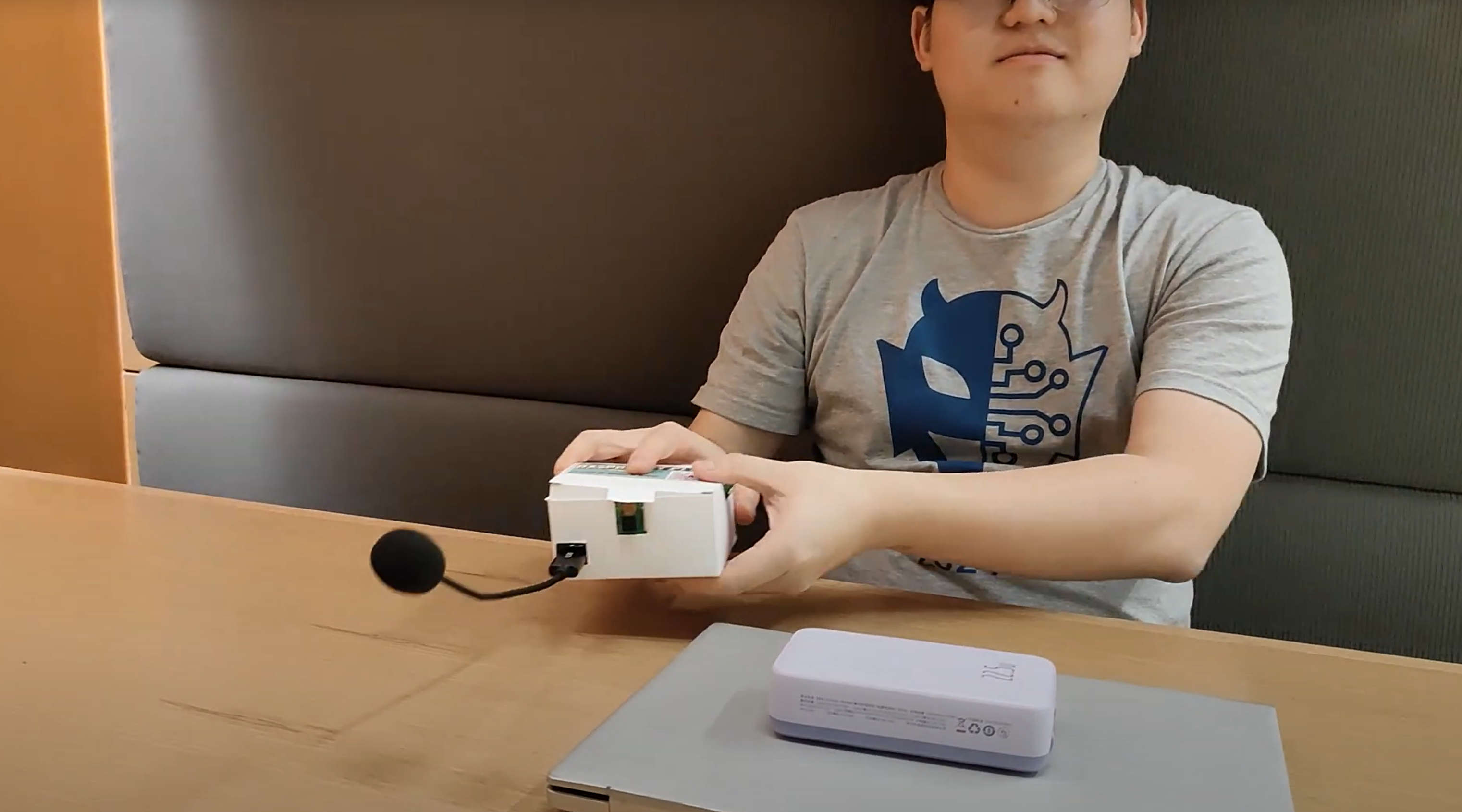
Flashback started with a simple question: What if we could help students retain knowledge better by creating an AI assistant that captures and recalls classroom moments? Built during the Duke 2024 AI Hackathon, our team created a wearable device and web app that records audio and video, then uses multimodal AI to help users query and revisit important information.
How It Works
Data Collection
Uses Raspberry Pi to capture audio and video during interactions or lectures
Processing & Storage
Data is uploaded to an intermediate server, then to a cloud service with multimodal Large Video Models
User Interaction
Users can prompt the web app, which retrieves memory details through the model's API
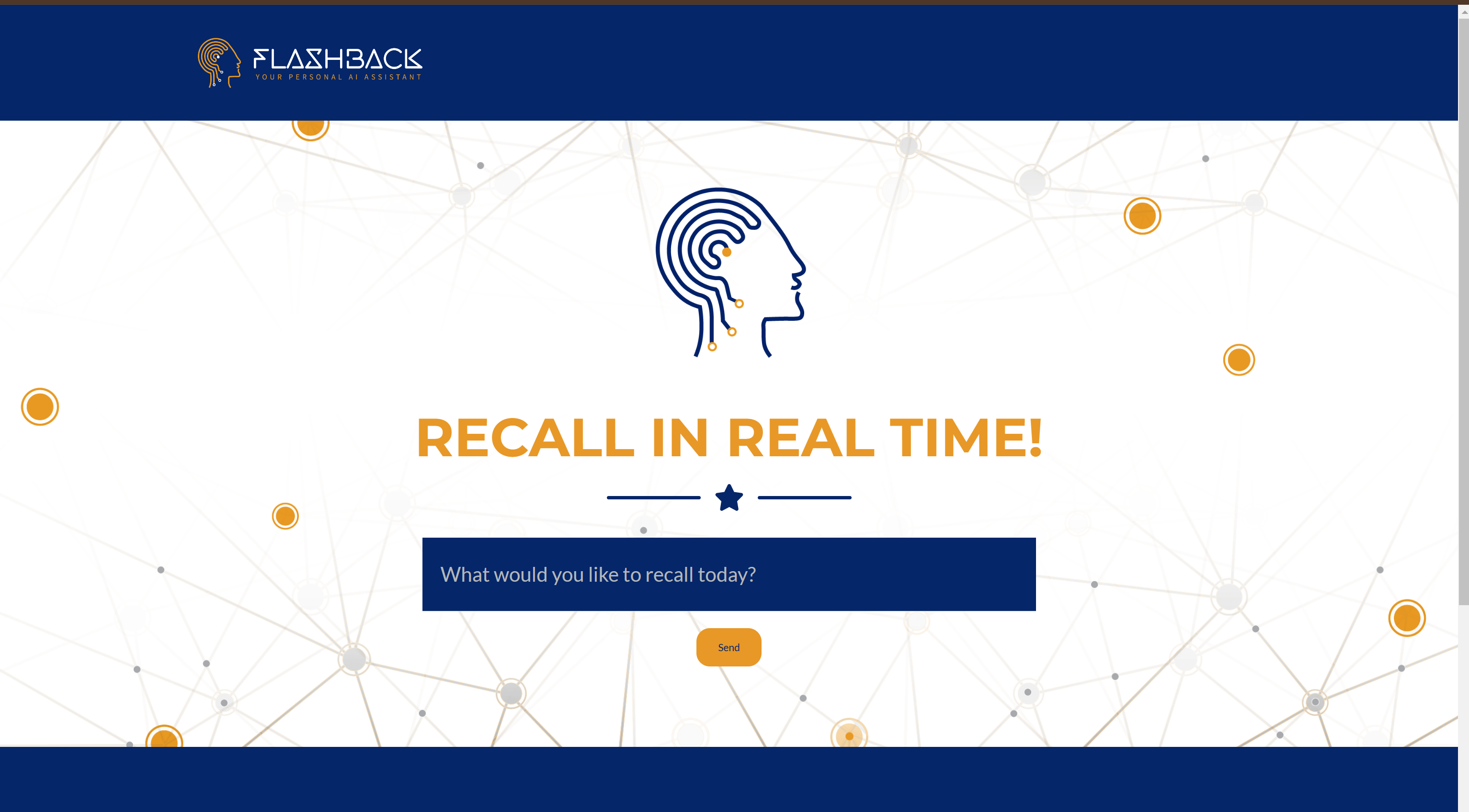
Welcome screen featuring the Flashback logo

Main interface for memory recall queries
Technologies Used
01 — Docker Container
For containerization and deployment
02 — Flask
Backend framework for API handling
03 — Python
Core programming language
04 — Virtual Compute Manager
Cloud infrastructure management
Other Application Areas
Memory Assistance
Supports individuals with Alzheimer's or memory impairments to train memory and enhance recovery
Potential Expansion
Multiple applications for everyday use to aid memory retention
Challenges & Solutions
Privacy Concerns
Issues with two-party consent laws and the necessity for recording notifications
→ Solution: Consent agreements, green light indicator for active recording, pre-recording notifications
Security Measures
Protecting sensitive recorded data from unauthorized access
→ Solution: Reversible encryption/hashing to prevent unauthorized data access
Technical Constraints
Battery limitations and processing speed challenges
→ Solution: Plans for low-energy electronics, smartphone integration, edge computing, and improved algorithms
The Team
Our cross-functional team of four brought together expertise in product design, machine learning, hardware engineering, and full-stack development. We collaborated intensely over 36 hours to bring Flashback from concept to working prototype, winning the Education Track at Duke AI Hackathon 2024.
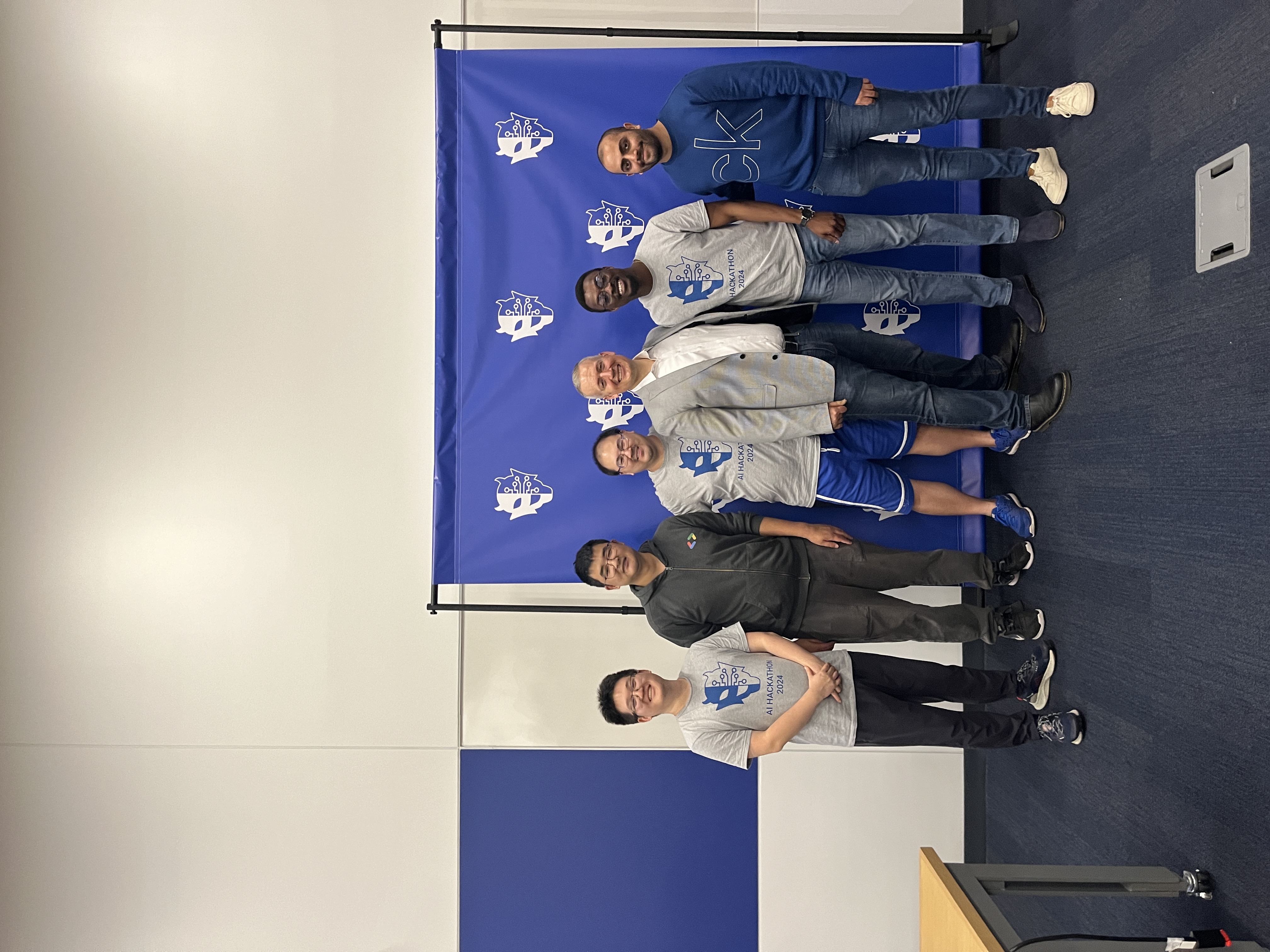
Team Flashback celebrating our Education Track win at Duke AI Hackathon 2024

Presenting Flashback to judges and attendees at Duke AI Hackathon
What I Learned
Building Flashback in 36 hours taught me how to rapidly prototype AI-powered hardware solutions while considering real-world ethical implications. I learned to balance ambitious technical goals with practical constraints, focusing on core functionality rather than feature bloat. The project reinforced the importance of user privacy in AI applications—designing consent mechanisms and security protocols from the start, not as afterthoughts.
Working with a cross-functional team under hackathon pressure showed me how to communicate design decisions quickly and iterate based on technical feasibility. While Flashback started as an educational tool, exploring its potential for memory assistance applications broadened my perspective on designing inclusive, accessible technology.